Launch price $37 instead of $67 · held for you for 23
hours
:59
min
:59
sec
Start saving →

Cut your winter heating bill by $1,000 or more. And wake up to a warm house.

Press play. Sound on. Knut explains the whole method in three minutes.

Yes, I want to burn less wood · $37

Instant PDF, 98 pages · one payment, no subscription · on your phone a minute after you pay

The honest math

What a winter of heat costs you. And what it costs after.

A typical house that heats mostly with wood and keeps a furnace for the nights. Your numbers will differ. The direction will not.

NowWith the book
Firewood you burn4 cords → 2.7 cords, about $325 a cord
$1,300
$877
The backup furnace at 3 a.m.propane, oil or electric, when the stove dies
$1,100
$680
Wood you paid for and never gotthe short "cord", the wet wood sold as seasoned
$120
$0
Emergency wood in Januarygas-station bundles, fire logs, firestarters
$100
$0
Chimney and stove repairsthe second sweep, creosote, cracked glass
$200
$50
Nights you get up to reload
most
none
Total, per winter$2,820$1,607
$1,000 to $1,700

back in your pocket, every year. Wood only, no furnace? Then count on $400 to $800.

Sources: 3 to 6 cords a season (Chimney Safety Institute of America); $300–325 a delivered cord (2025–2026 price guides); dry wood burned right uses 30 % less (EPA Burn Wise); average winter propane spend $1,246, heating oil $2,115 (U.S. Energy Information Administration, Winter Fuels Outlook 2026–27). The furnace line assumes a stove that holds the night cuts backup fuel by a quarter to a third.

The book costs $37. Less than one fill of the propane tank. It pays for itself the first night the stove holds until morning.

Introducing

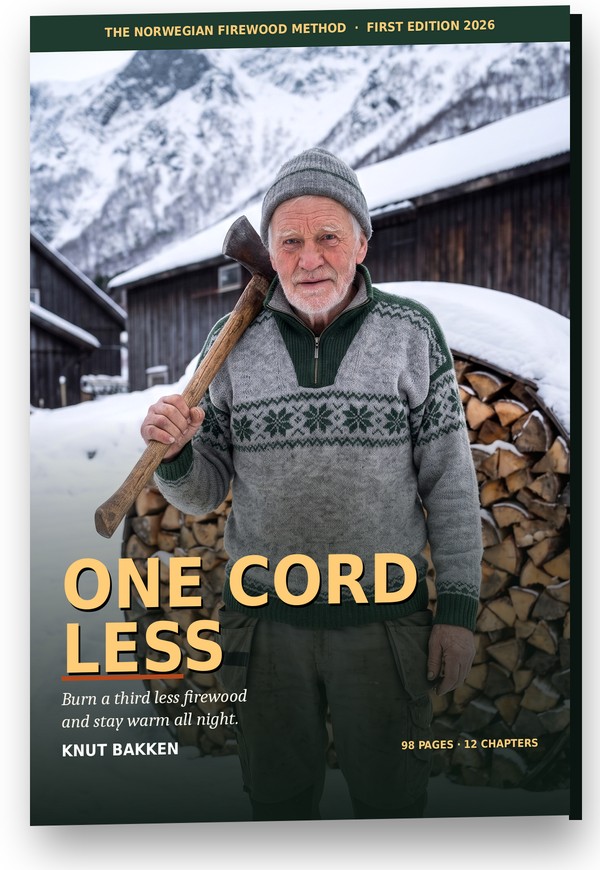
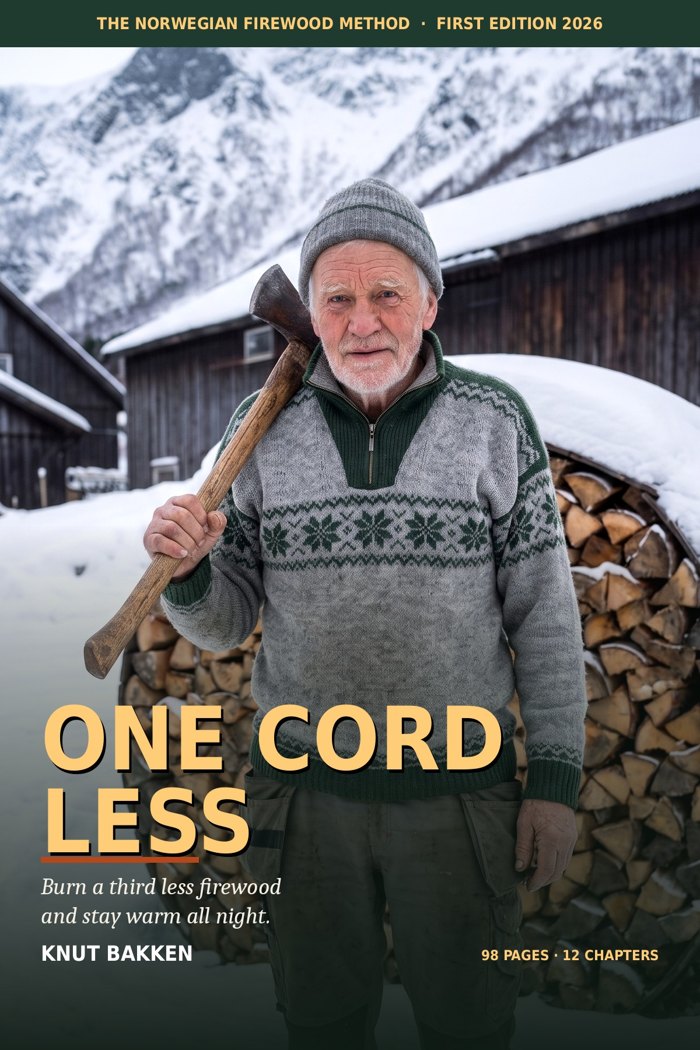
One Cord Less, the book

One Cord Less. Everything my father knew about wood, written down in one plain book.

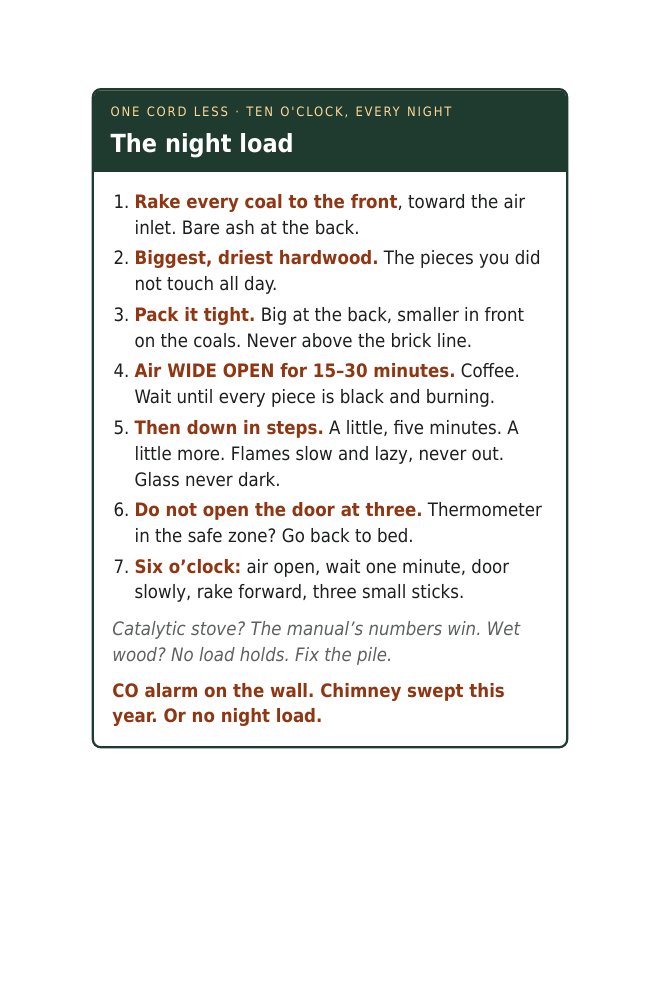
The year of the wood, from the day you buy it to the ash bucket. How to check a cord before you pay for it. Which wood to burn and which never to burn. The round Norwegian stack that dries in one summer. And the night load: the twenty minutes with the air open that decide whether you sleep or get up at three.

Big type, on purpose. Every chapter ends with a short list you can check against your own house, and the four cards at the back are made to cut out and hang beside the stove.

  • 98 pages
  • 12 chapters
  • 7 drawings
  • 4 cards to cut out
  • PDF on your phone in a minute
⅓
Less firewood
$1,000+
A year, typical house
8 h
Of heat from one load
$37
One payment, no subscription
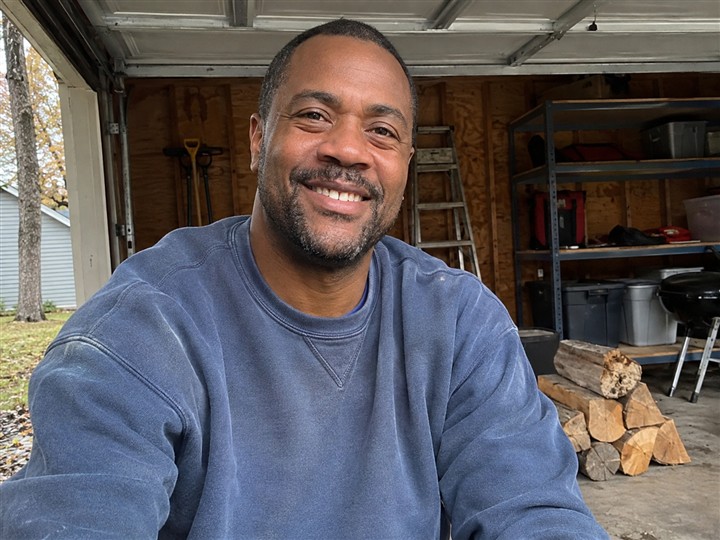
Illustrative portrait of Ellen
★★★★★

I took a tape measure to the woodpile.

“We’ve ordered from the same guy for years. I’d never thought to ask how long he cut his splits. I measured our stove opening with the buying chapter in front of me, and now I know what length to ask for.”

Ellen · Maine

Illustrative portrait of Marcus
★★★★★

I’d been testing the wrong side.

“I used to press the moisture meter into the end of a log and call it dry. Knut explains why you split one open and check the fresh face. I tried it on a split from the same pile and got two very different readings. It’s the page I’ve gone back to twice.”

Marcus · Minnesota

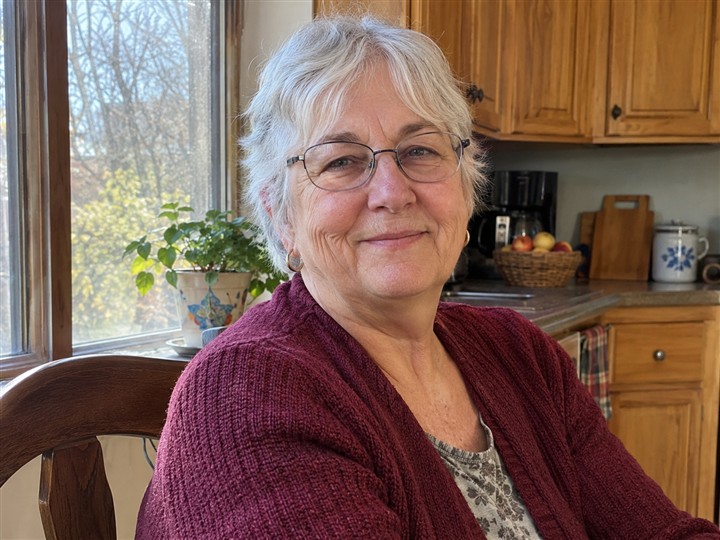
Illustrative portrait of Ruth
★★★★★

We finally labeled the stacks.

“My husband and I could never agree which row was last spring’s wood. After the stacking chapter we penciled the month and year on two scraps of cedar and screwed one to each rack. I can tell which pile to start on from the kitchen window.”

Ruth · Wisconsin

Does this sound like your winter?

The wood goes too fast. The house is cold at three in the morning.

I read the wood stove forums. Every winter the same three complaints come back, from people in Michigan, Maine, Ohio, the mountains of North Carolina.

"A full load burns down to coals in about ninety minutes. I'm going through wood way too fast."

"I set my alarm three times a night so I don't wake up to a cold house."

"I ordered a cord. When I stacked it, it was three quarters of a cord, and half of it was wet."

Knut, one eyebrow raised

None of that is the stove's fault, my friend. And it is not your fault. Nobody showed you. The wood is wet, or the splits are too small, or the air is open when it should be closed. Those are habits, and habits can be changed in one week. My father fixed them in me when I was eight. This book does the same for you.

The backbone

My father's five rules. Keep these and you could work out most of the book yourself.

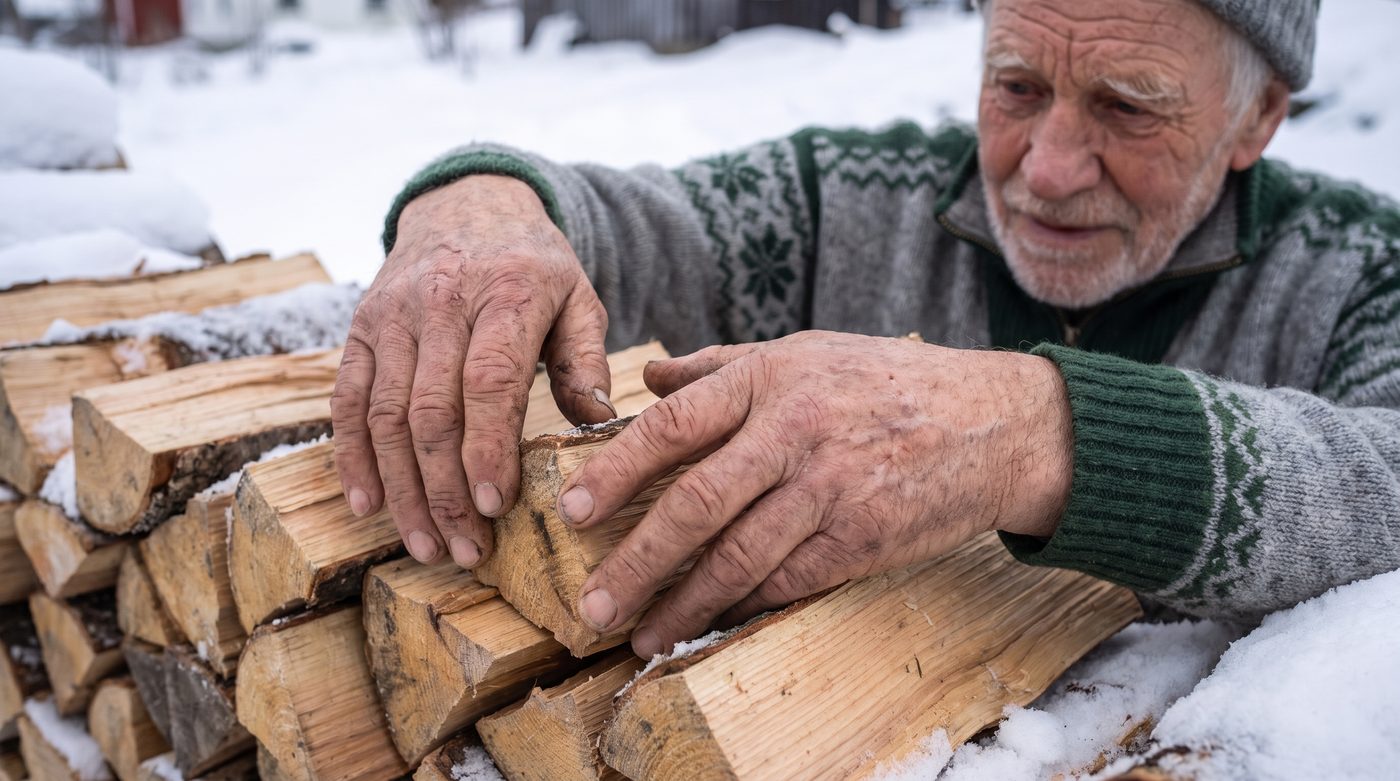
Knut's hands stacking split birch in the snow
1

Split in spring. Burn next winter.

Wood is not dry because it is old. It is dry because it is split, stacked and given a summer of wind. Under 20 percent water, or it goes back on the pile.

2

A cord is a cord.

Four feet by four feet by eight feet. One hundred twenty-eight cubic feet, stacked tight. Anything else has a different name and a different price, and you check it before the truck leaves.

3

Feed it when it is hungry. Not when it is eating.

Most people add wood too early and open the air too wide. The fire eats twice what it needs and sends the rest up the chimney.

4

A good fire is lit once a winter.

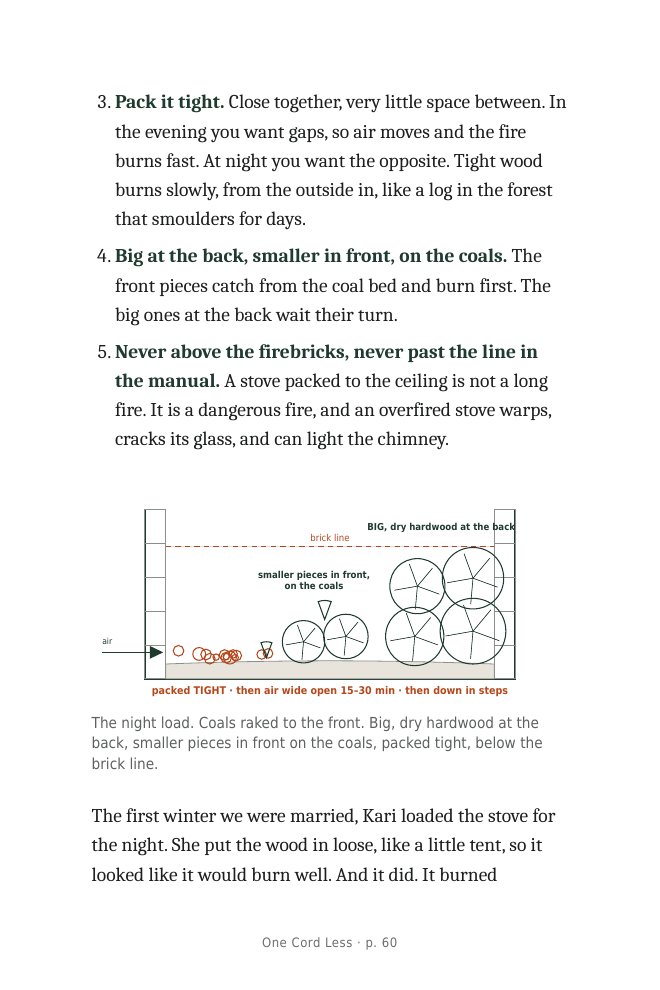
The night load is a method, not a hope. Big dry splits, tight, coals pulled forward, twenty minutes with the air open, and then you go to bed.

5

Panic is just bad planning.

Winter is not an emergency. It is a season. You prepare in summer, and you prepare with a carbon monoxide alarm on the wall and a clean chimney, every year, no exceptions.

What's inside

Twelve chapters. The year of the wood, from the day you buy it to the ash bucket.

Every chapter does the same four things: what goes wrong in most houses, how my father did it, the steps with the numbers in them, and the one safety line you do not skip. Big type, one idea per page, a checklist at the end of each chapter.

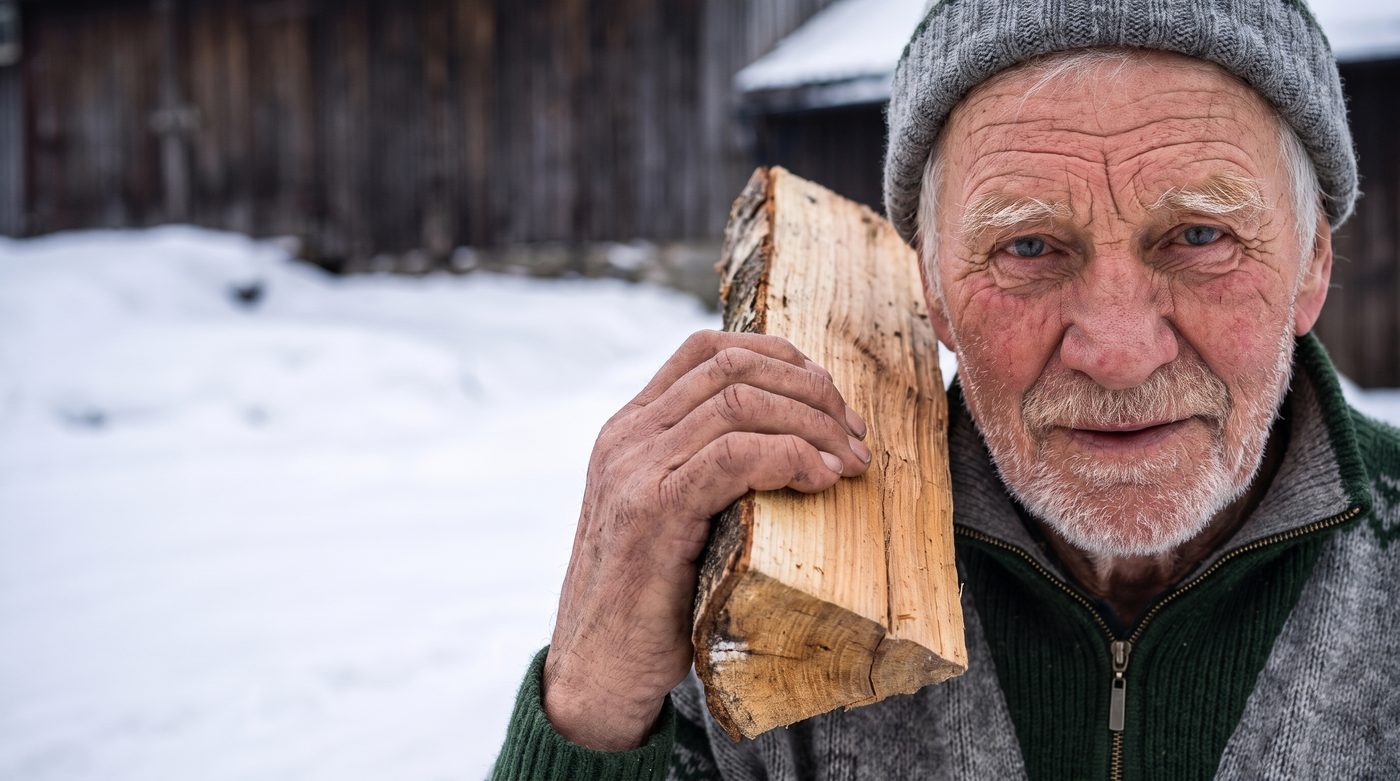
Knut holding a split of dry birch

Chapters 3 to 7: buy it, split it, stack it, dry it.

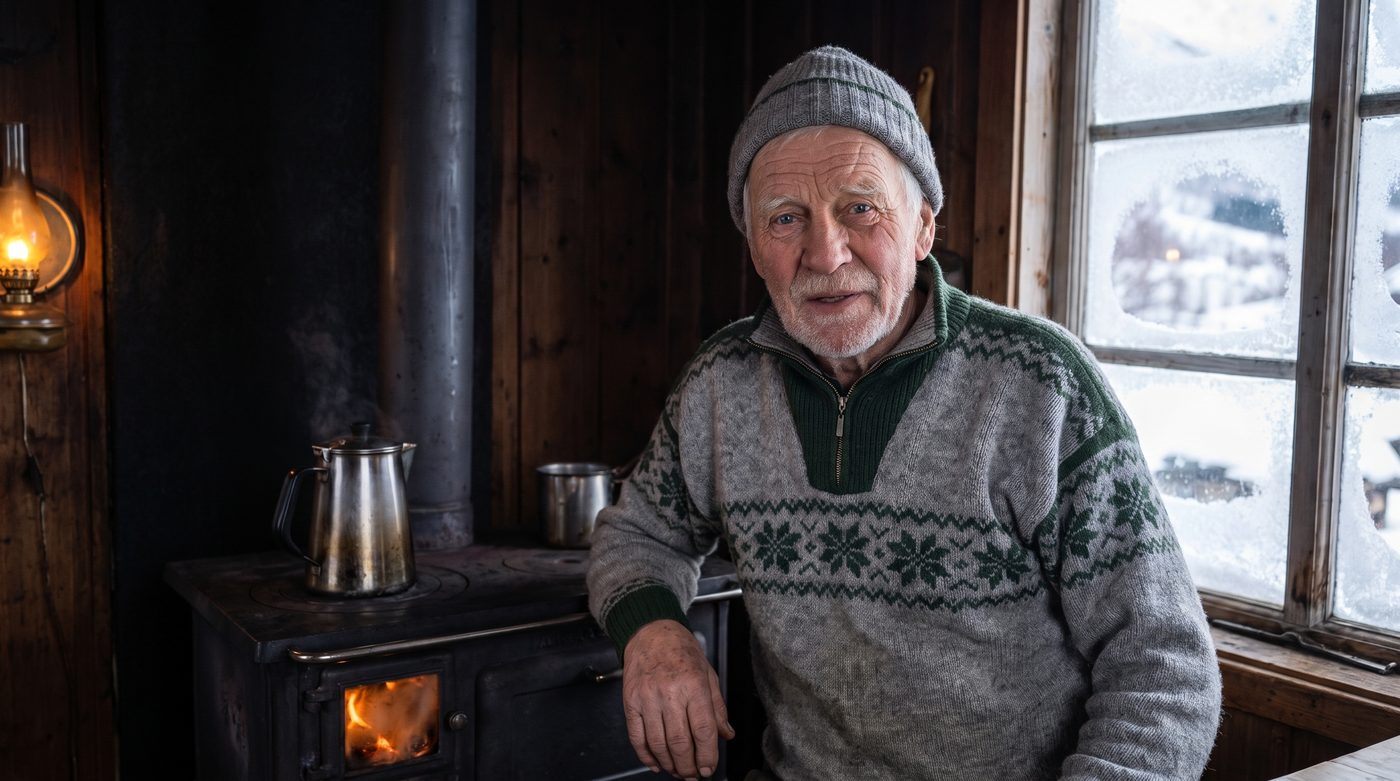
Knut beside the wood stove in his kitchen

Chapters 8 to 11: the eight-hour load, the furnace, the chimney, the blackout.

0Knut's promiseThree in the morning in a cold house, and the promise I made my father. The math, on one page.p. 5
1The wood yearWhat to do in March, June, September and December. Most people start in October, which is why they are cold.p. 9
2How much wood you really needCords by house size and stove. Why a "face cord" is one row, and why a pickup bed is not a cord.p. 14
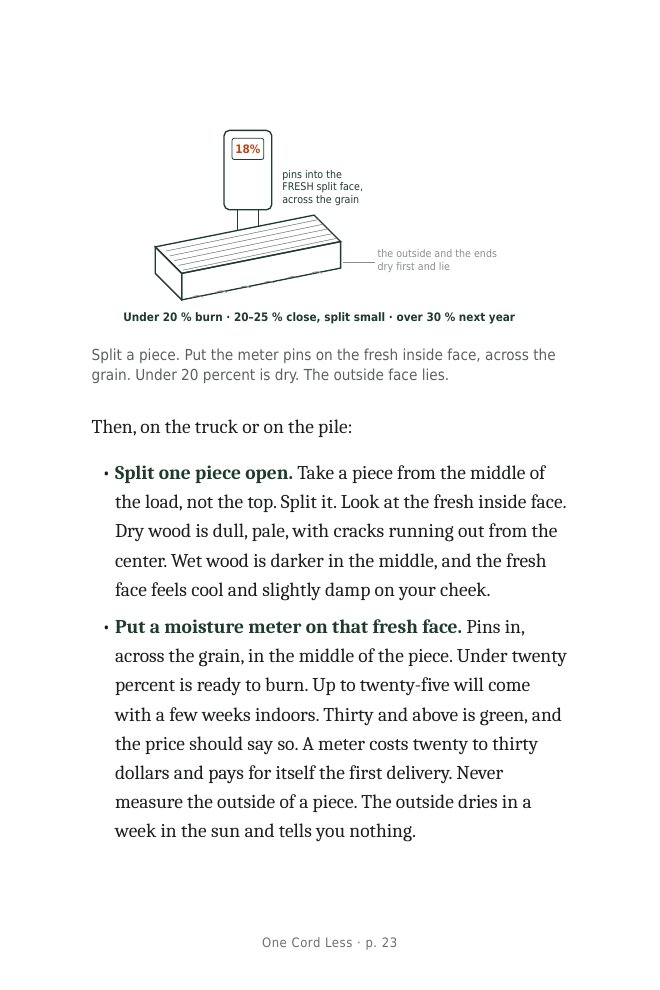
3Buying wood without getting cheatedThe five questions before you pay. How to split a piece on the spot and read the meter. Why spring wood costs less.p. 20
4Which wood to burn, and which neverAmerican species from best to worst for heat. The four kinds that never go in a stove, including the one that is free.p. 27
5Split it rightBlock at knee height. Read the cracks. The size of split that makes a fire last, and the tired swing that finds your foot.p. 34
6Stack it roundThe Norwegian round stack, step by step. Pallets, open sides, cover only the top. Never against the house.p. 42
7Dry it in one summerSun, wind and which way to face the pile. The two tests that tell you it is ready, and the one everybody trusts that lies.p. 50
8The eight-hour loadHour by hour from five in the evening to six in the morning. The ash bed, the split size, the twenty minutes that decide the night. Coals at dawn, and the furnace never heard from.p. 56
9Keep the heat, keep the furnace offOne warm room, the stone that gives heat back at four in the morning, what a stove fan does and does not do, and where to set the furnace thermostat so it only runs when you want it to. How to read your propane or oil bill and watch it drop.p. 66
10Clean and safeCreosote, the yearly sweep, ashes in a metal bucket outside, and the two alarms that are not optional.p. 72
11When the power goes outHeat and cook on the stove you already have. What never comes inside, even for one night.p. 79
12My father's rulesTen lines to hang beside the stove.p. 85
+The back of the bookLoad log, drying tracker, the savings calculator, the autumn checklist.p. 88
Look inside

Three real pages from the book, the way they open on your phone.

The type is set big on purpose. Tap a page to see it full size.

The offer

One price. The whole book, and the four cards that go beside the stove.

One Cord Less, the book

Instant PDF · First edition

One Cord Less

An old Norwegian logger's way to burn less firewood and stay warm all night. 98 pages, 12 chapters, every step with the numbers in it.

One Cord Less, the book98-page illustrated PDF, big type, 12 chapters, a checklist at the end of every chapter, seven drawings$37
The four cards, inside the bookFirewood Buyer's Checklist, Night Load Card, Savings Calculator Card, Power Outage Heat Plan. Cut them out and hang them beside the stove$16
The back of the bookLoad log, drying tracker, the honest-math worksheet with your own numbers, the autumn checklist$9
Every future edition, freeWhen I correct or add a chapter, the new file goes to your email$10
Total value$72
You pay today$37
$67 $37 YOU SAVE $30 · 45% OFF Launch price · held for you for the next 24 hours
Send me the book · $37

On your phone about a minute after you pay. Nothing ships. No account to make.

🔒 Secure checkout by StripeOne payment, no subscriptionPhone, tablet or computer
Optional · at checkout

Want the Stove-Side Kit? It is $10 more, and you choose when you press the button.

For people who would rather not fight the printer. It adds:

  • The four cards as separate print-ready PDFs, letter size, bigger type, no page numbers. Open, print, cut, hang.
  • My Father's Rules as a one-page poster for the wall beside the stove.
  • The Wood & Savings Calculator as a spreadsheet. Type your cords, your price and your furnace bill; it does the sum. Excel, Numbers or Google Sheets.

Nothing you need to decide now. Press any button and pick: just the book, or the book with the kit.

Who wrote this

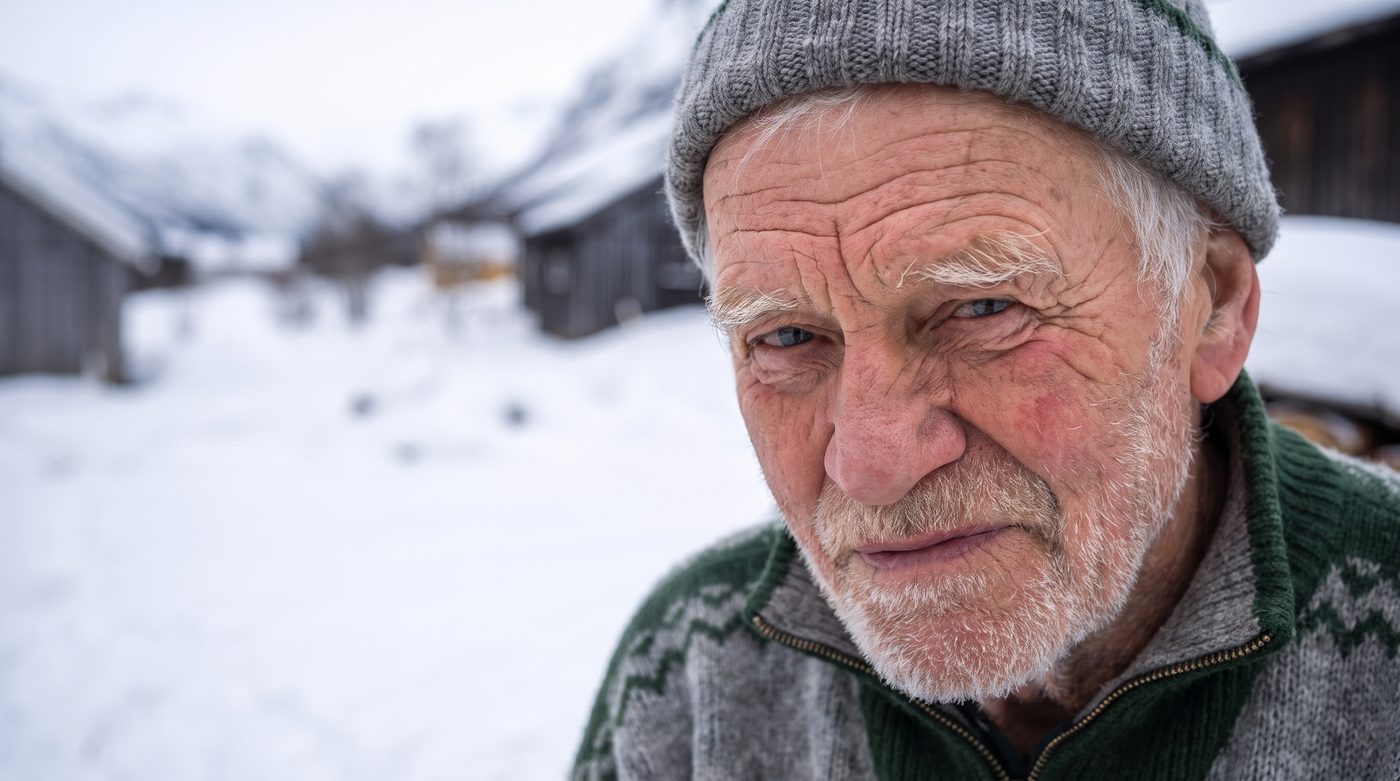
I'm Knut Bakken.

Knut Bakken

Eighty-two years old. Thirty winters a logger, then a farm in the mountains of Trøndelag, Norway, where the snow comes in October and leaves in April. A wood stove is not a hobby here. It is the house.

My father showed me how to split, stack and burn when I was eight. I have done it every year since. He did it his way for sixty winters, and in sixty winters our house was never cold in the morning. Not once.

Before he died he made me promise one thing: that what he knew about wood would not die with me. My son works in North Dakota now, and his neighbors started writing to me with questions. The same questions, every winter. So I wrote it all down. One book, in plain words, with the numbers in it.

I will not sell you a miracle stove or a secret. I will tell you what works, what only helps a little, and what can hurt you. That is the whole trade.

Knut

Plain words about Knut. Knut Bakken is a character. His face and voice are made with AI, and his farm is a story. The method is not. Every number in this book is checked against the EPA's wood-burning guidance, the National Fire Protection Association, the Chimney Safety Institute of America and university extension services, and the sources are listed at the back. You are buying the method, and you can check every line of it.

Questions, answered plainly

Before you buy.

Is a paper book coming in the mail?

No, and I say it plainly so nobody is surprised. This is a digital book, a PDF. Nothing ships. About a minute after you pay it is on your phone, and the same link waits in your email. If you want paper, print it at home. The four cards are made for exactly that.

I am not good with computers.

You do not need to be. You press one button and the book opens the way a photograph opens. No account, no password. If it does not open, write to me and I will walk you through it.

Is this a subscription? Will my card be charged again?

No. One payment, one time. No membership, no monthly anything, no trial that turns into a bill.

Isn't all of this free somewhere online?

Pieces of it, yes, in a hundred videos that disagree with each other. This is one method, in the right order, with the numbers checked, and you can read it beside the stove with the air control in your hand. The forum threads I read are full of people who watched every video and still burn a cord a week.

I buy my wood. Does this still help?

It helps most of all. Chapters 2 and 3 are written for you: how much to order, how to check it before you pay, how to spot the short cord and the wet "seasoned" wood, and when in the year to buy so it costs less and arrives dry.

I cut my own wood. Where is my saving?

In cords you do not cut. One third less wood is one third less felling, splitting, stacking and hauling, and one third less time at the stove. At seventy, that is the saving that matters.

I have a furnace too. Where does the $1,000 come from?

Most of it comes from the furnace, not the wood. If your stove goes out at two in the morning, the propane or oil furnace carries the house until you get up, every night, all winter. That is the quiet part of the bill. A load that holds eight hours keeps the furnace off at night, and chapter 9 shows you where to set the thermostat so it only runs when you decide. Add a cord or two of wood you no longer burn, and you are past $1,000 in an ordinary house. If you have no furnace at all, your saving is the wood alone: $400 to $800.

Will it work with my stove?

The method is written for an ordinary wood stove or insert in an ordinary North American house: old steel box, modern EPA stove, catalytic or not. Each chapter says where the difference matters. It is not written for open fireplaces, pellet stoves or outdoor boilers.

Will it keep a fire going for twelve hours?

I will not promise that, because it depends on your stove and your wood. What I promise is coals in the morning and a house that is warmer than it was, without getting up at three. Most readers see that in the first week.

Last call

Winter does not care whether you read this. Your woodpile does.

$37 once. Instant PDF. A thousand dollars or more a year in wood and furnace fuel you do not burn, and a warm house at three in the morning.

Keep the furnace off this winter · $37

Keep your woodpile dry and your neighbours close. Ha det.